
Blog
Gearless vs Geared Elevator Traction Motors: Which Elevator Motor Is Best for Performance, Efficiency, and Long-Term Value?

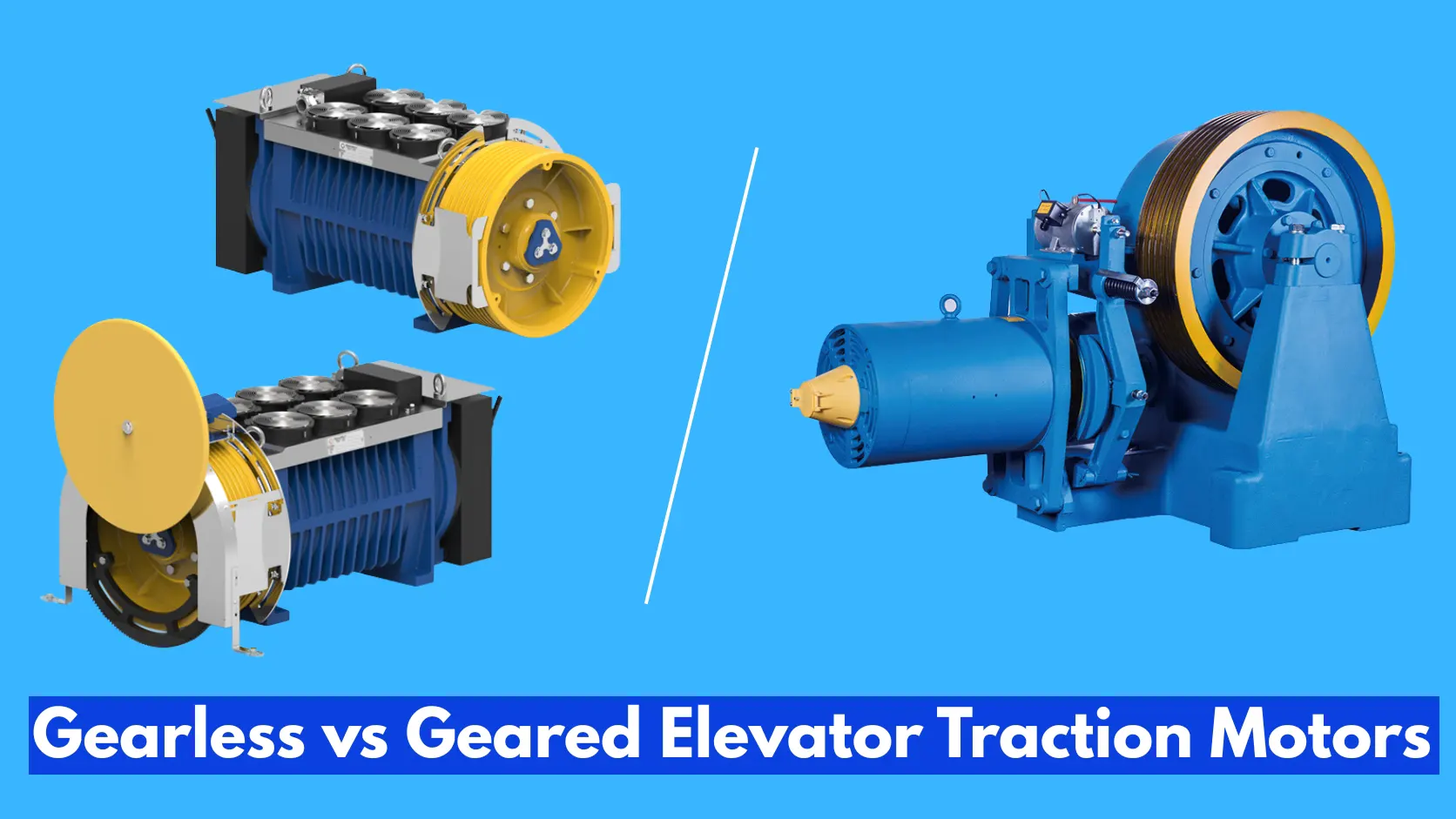
Choosing the right elevator traction motor is one of the most important decisions in any elevator project. Whether you are installing a new passenger elevator, modernizing an existing lift, or planning a commercial building project, the traction machine directly affects energy consumption, ride comfort, maintenance costs, and long-term reliability.
Many building owners face the same question:
Should you choose a gearless elevator motor or a geared elevator motor? Both technologies have proven performance records. However, each serves different building requirements, budgets, and operational goals.
In this guide, we compare gearless vs geared elevator traction motors based on cost, energy efficiency, maintenance, lifespan, performance, and application suitability to help you make the best investment decision.
What Is an Elevator Traction Motor?
An elevator traction motor is the heart of a traction elevator system. It drives the hoisting machine that moves the elevator car through steel ropes and a traction sheave.
Modern elevator systems primarily use two types of traction machines:
- Gearless elevator motors
- Geared elevator motors
Both systems are widely used in residential elevators, commercial elevators, hospital lifts, freight elevators, and high-rise building elevators.
What Is a Geared Elevator Traction Motor?
A geared elevator motor uses a motor connected to a gearbox. The gearbox reduces motor speed and increases torque before transferring power to the traction sheave.
Key Components
- Induction motor
- Gear reduction system
- Traction sheave
- Brake system
- VVVF drive
Advantages of Geared Elevator Motors
- Lower initial investment
- Proven technology
- Suitable for low-rise and mid-rise buildings
- Easy availability of spare parts
Disadvantages
- Higher energy consumption
- More moving parts
- Increased maintenance requirements
- Higher noise levels
Best Applications
- Residential apartments
- Mid-rise office buildings
- Freight elevators
- Budget-conscious projects
What Is a Gearless Elevator Traction Motor?
A gearless elevator motor eliminates the gearbox. The motor directly drives the traction sheave using advanced technology such as a Permanent Magnet Synchronous Motor (PMSM).
Key Components
- PMSM motor
- Direct drive system
- Traction sheave
- Regenerative drive
- Advanced control system
Advantages of Gearless Elevator Motors
- High energy efficiency
- Smooth ride quality
- Quiet operation
- Lower maintenance costs
- Longer lifespan
Disadvantages
- Higher purchase cost
- Higher initial installation investment
Best Applications
- High-rise buildings
- Premium residential towers
- Hotels
- Hospitals
- Shopping malls
- Commercial office towers
Gearless vs Geared Elevator Traction Motors: Quick Comparison
| Feature | Gearless Motor | Geared Motor |
| Initial Cost | Higher | Lower |
| Energy Efficiency | Excellent | Moderate |
| Maintenance Cost | Low | Higher |
| Noise Level | Very Low | Moderate |
| Ride Comfort | Excellent | Good |
| Lifespan | 25–30+ Years | 15–25 Years |
| Machine Room Requirement | Minimal | Larger |
| Suitable Building Height | High-Rise | Low to Mid-Rise |
| Operating Cost | Lower | Higher |
Gearless elevator motors offer better energy efficiency, smoother performance, lower maintenance, and longer service life. Geared elevator motors are more affordable initially and work well for low-rise applications.
Cost Comparison: Which Elevator Motor Offers Better Value?
Cost should never be evaluated based only on purchase price.
I. Initial Purchase Cost
Geared traction machines typically cost less because they use traditional motor and gearbox technology.
Gearless traction machines require advanced PMSM technology and sophisticated control systems, resulting in a higher upfront investment.
II. Long-Term Operating Cost
Over time, gearless systems often recover their higher purchase cost through:
- Reduced electricity consumption
- Lower maintenance expenses
- Fewer component replacements
- Improved reliability
For long-term ownership, gearless technology delivers better total cost of ownership (TCO).
Energy Efficiency Comparison
Energy efficiency is one of the biggest reasons many modern buildings choose gearless elevator motors.
Geared Elevator Energy Consumption
Because power passes through a gearbox, some energy is lost through friction and heat generation.
I. Gearless Elevator Energy Consumption
Gearless motors use direct-drive technology, reducing mechanical losses.
Benefits include:
- Lower power consumption
- Improved motor efficiency
- Reduced operating expenses
- Better sustainability performance
Many gearless systems also incorporate regenerative drives that return excess energy to the building’s electrical system. For energy-saving elevator technology, gearless traction machines lead the market.
Maintenance and Reliability Comparison
Maintenance directly affects elevator uptime and operational costs.
1. Geared Elevator Maintenance
Regular servicing includes:
- Gearbox lubrication
- Gear inspections
- Bearing maintenance
- Mechanical adjustments
2. Gearless Elevator Maintenance
Gearless systems contain fewer moving parts.
Benefits include:
- Less wear and tear
- Fewer maintenance visits
- Reduced downtime
- Improved reliability
Lower maintenance requirements make gearless motors attractive for commercial buildings.
Performance Comparison
I. Ride Quality
Gearless motors provide exceptionally smooth acceleration and deceleration.
Passengers experience:
- Less vibration
- Reduced noise
- Better travel comfort
II. Speed Capability
Gearless traction systems support significantly higher speeds than geared systems.
This makes them ideal for:
- High-rise elevators
- Premium commercial buildings
- Modern residential towers
For speed, comfort, and passenger experience, gearless motors outperform geared systems.
Lifespan and Durability
A traction machine is a long-term investment.
I. Geared Motor Lifespan
Typically:
- 15–25 years
- Depends on maintenance quality
- Gear wear affects longevity.
II. Gearless Motor Lifespan
Typically:
- 25–30+ years
- Fewer mechanical components
- Lower wear rates
Longer service life improves return on investment.
Machine Room Requirements
I. Geared Systems
Traditional geared elevators often require dedicated machine rooms.
This increases:
- Construction costs
- Space requirements
II. Gearless Systems
Many gearless traction machines support Machine Room-Less (MRL) elevator designs.
Benefits include:
- Space savings
- Lower building costs
- Greater design flexibility
MRL compatibility makes gearless systems highly attractive for modern developments.
Which Elevator Motor Is Best for Different Building Types?
I. Low-Rise Residential Buildings
Best Choice: Geared Elevator Motor. Reason: Lower installation cost and sufficient performance.
II. Mid-Rise Commercial Buildings
Best Choice: Depends on the budget. Geared systems offer affordability, while gearless systems reduce long-term operating costs.
III. Hospitals
Best Choice: Gearless Elevator Motor. Reason: Smooth ride quality, reliability, and quiet operation.
IV. Hotels
Best Choice: Gearless Elevator Motor. Reason: Superior passenger comfort and luxury experience.
V. Shopping Malls
Best Choice: Gearless Elevator Motor. Reason: High passenger traffic and energy efficiency.
VI. High-Rise Buildings
Best Choice: Gearless Elevator Motor. Reason: High speed capability and lower energy consumption.
Gearless vs Geared Motors in Bangladesh
Building owners in Bangladesh increasingly prefer gearless elevator motors due to:
- Rising electricity costs
- Reduced maintenance requirements
- Growing demand for energy-efficient buildings
- Better long-term operating economics
However, geared elevator motors remain popular in smaller residential projects where the initial budget is a key consideration.
Pros and Cons Summary
Gearless Elevator Motor
Pros
- Energy efficient
- Low maintenance
- Quiet operation
- Smooth ride
- Long lifespan
- MRL compatibility
Cons
- Higher initial investment
Geared Elevator Motor
Pros
- Lower upfront cost
- Proven technology
- Easy maintenance support
Cons
- Higher energy consumption
- More maintenance
- More noise and vibration
- Shorter lifespan
Frequently Asked Questions (FAQs)
Q. What is the difference between gearless and geared elevator motors?
A gearless elevator motor drives the traction sheave directly, while a geared motor uses a gearbox to transfer power. Gearless systems are more energy efficient and require less maintenance.
Q. Which elevator motor is more energy efficient?
Gearless elevator motors are more energy efficient because they eliminate gearbox-related energy losses and often include regenerative drive technology.
Q. Do geared elevator motors require more maintenance?
Yes. Geared motors contain additional moving parts, including gears and lubrication systems, which require regular maintenance.
Q. Which elevator motor lasts longer?
Gearless motors typically last longer because they have fewer mechanical components and experience less wear over time.
Q. Are gearless elevator motors worth the higher cost?
For most commercial buildings, hotels, hospitals, and high-rise projects, the long-term energy savings and lower maintenance costs often justify the higher initial investment.
Both gearless and geared elevator traction motors have their place in the elevator industry. If your priority is a lower upfront investment for a low-rise building, a geared elevator motor may be the right choice. If you want maximum energy efficiency, reduced maintenance, smoother ride quality, longer lifespan, and better long-term value, a gearless elevator motor is the superior solution.
For most modern commercial buildings, hospitals, hotels, shopping malls, and high-rise developments, gearless elevator traction technology remains the preferred choice.
Looking for High-Quality Elevator Traction Motors and Spare Parts?
Choose a trusted supplier that offers genuine gearless elevator motors, geared traction machines, elevator control systems, VVVF drives, safety components, and technical support to ensure reliable elevator performance for years to come.
Match the Motor With the Control System
Motor selection should be checked against rated load, speed, roping, drive power and controller compatibility. Compare our lift control inverters and control cabinets, then contact our technical team for compatibility guidance.
Information Needed to Compare Traction Systems
Record rated load, speed, travel, roping, sheave details, motor data, drive type and available machine-room space. Then browse lift traction motors, review compatible lift inverters, or send the project details for product availability guidance.