
Blog
Why Elevator Guide Rails Are Important: The Foundation of Safe and Smooth Elevator Operation

Have you ever wondered what keeps an elevator moving smoothly and safely inside the shaft?
Most people notice the elevator cabin, doors, or control panel. However, one of the most important elevator components works quietly in the background—the elevator guide rail.
Without properly installed lift guide rails, elevators can experience vibration, misalignment, poor ride quality, and even serious safety risks.
Whether in a residential building, commercial tower, hospital, or shopping mall, elevator guide rails play a critical role in ensuring safe vertical transportation. They help maintain stability, support accurate movement, and improve overall elevator performance.
In this guide, you’ll learn why elevator guide rails are important, how they work, their key features, applications, and how they contribute to elevator safety and reliability.
What Are Elevator Guide Rails?
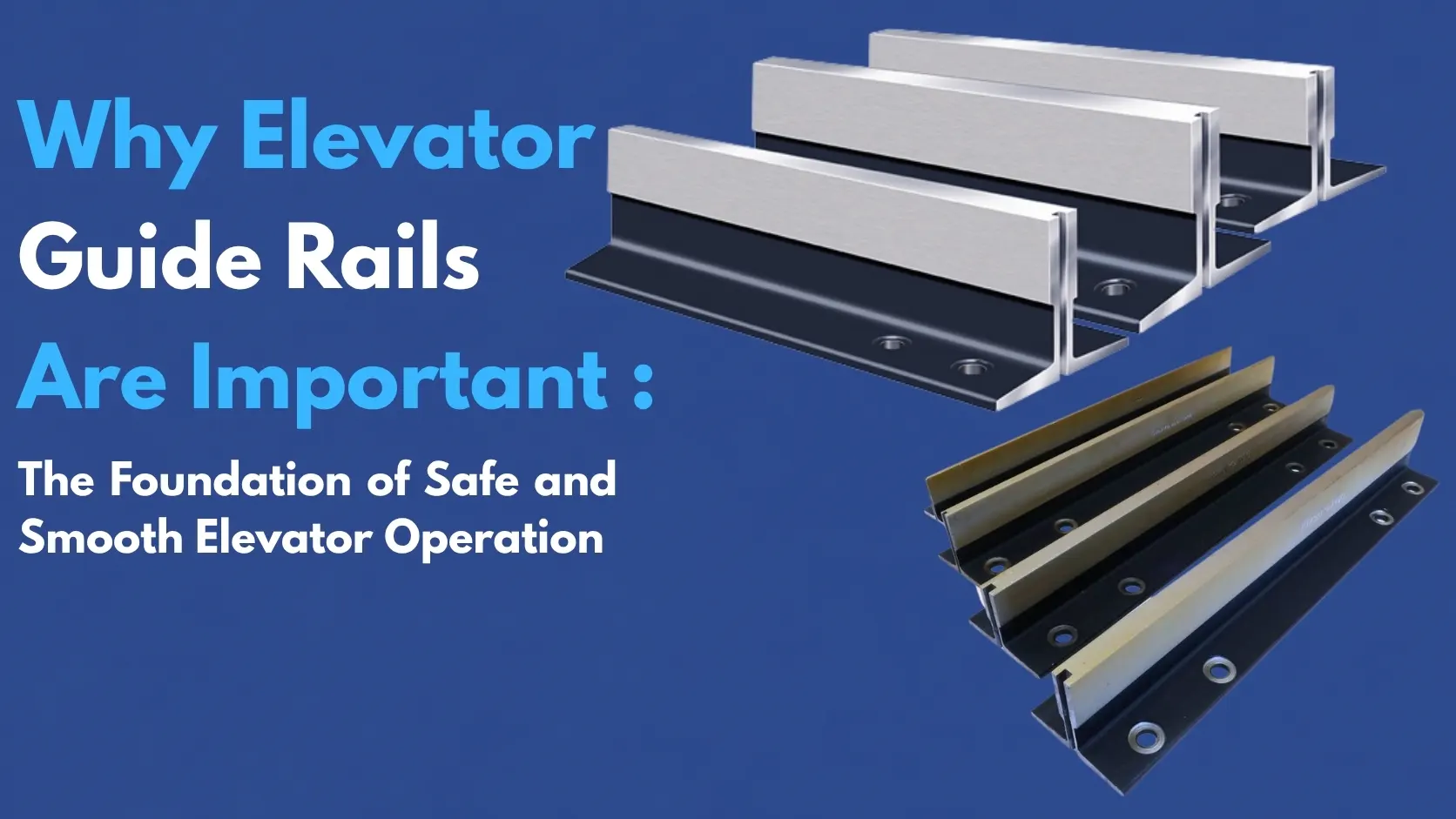
Elevator guide rails are specially manufactured steel tracks installed vertically inside the elevator shaft. Their primary purpose is to guide the elevator car and counterweight during travel.
They ensure:
- Stable elevator movement
- Accurate vertical alignment
- Smooth ride quality
- Passenger safety
- Proper operation of elevator safety systems
Guide rails are considered one of the most critical elevator safety components.
How Elevator Guide Rails Work
As the elevator travels between floors, guide shoes or roller guides remain in contact with the guide rails.
The rails help:
- Control elevator direction
- Prevent unwanted side-to-side movement
- Maintain precise alignment
- Support the operation of emergency safety gear.
- Improve floor leveling accuracy
This guiding system allows the elevator cabin to move safely and smoothly throughout the building.
Key Features of Elevator Guide Rails
1. Ensure Passenger Safety
Safety is the primary function of elevator guide rails.
The rails help keep the elevator cabin and counterweight aligned during operation. In emergency situations, they work together with the safety gear system to stop the elevator safely if overspeed conditions occur.
2. Maintain Elevator Stability
Without guide rails, the elevator cabin could sway or vibrate during travel.
Guide rails provide:
- Vertical stability
- Controlled movement
- Reduced cabin oscillation
- Improved passenger confidence
3. Improve Ride Comfort
Passengers expect a smooth ride.
Properly aligned elevator rail systems reduce:
- Cabin vibration
- Mechanical noise
- Sudden movements
- Travel discomfort
This results in a quieter and more comfortable elevator experience.
4. Support Accurate Floor Leveling
Modern elevators rely on precise positioning.
Guide rails help maintain alignment, allowing the elevator controller and encoder to stop accurately at each floor.
Benefits include:
- Reduced tripping hazards
- Improved accessibility
- Better passenger experience
5. Extend Elevator Lifespan
Smooth movement reduces stress on other elevator components.
Guide rails help protect:
- Elevator traction motors
- Door operators
- Safety systems
- Guide shoes
- Suspension systems
This reduces wear and extends equipment life.
Types of Elevator Guide Rails
I. T-Type Guide Rails
The most commonly used guide rail system for passenger and commercial elevators.
II. Hollow Guide Rails
Lightweight rails often used in lower-capacity elevator systems.
III. Solid Guide Rails
Designed for high-load and high-rise applications.
IV. Machined Guide Rails
Offer excellent precision and superior ride quality.
V. Cold-Drawn Guide Rails
Provide improved dimensional accuracy and durability.
Benefits of High-Quality Elevator Guide Rails
1. Enhanced Passenger Safety
Guide rails provide controlled elevator movement and support emergency braking systems.
2. Better Ride Quality
Passengers experience smoother travel and less vibration.
3. Reduced Maintenance Costs
Quality rails reduce wear on mechanical components.
4. Improved Elevator Reliability
Stable operation leads to fewer breakdowns and service interruptions.
5. Longer Equipment Lifespan
Reduced mechanical stress improves the durability of the entire elevator system.
Common Problems Caused by Poor Guide Rails
Low-quality or poorly installed guide rails can result in:
- Cabin vibration
- Excessive noise
- Poor floor leveling
- Guide footwear
- Rail misalignment
- Increased maintenance costs
- Reduced passenger comfort
Regular inspection and maintenance help prevent these issues.
Elevator Guide Rails and Modernization Projects
During elevator modernization, guide rails should always be evaluated.
Replacement may be necessary if:
- Rails are damaged.
- Corrosion is present.
- Alignment issues exist
- Load requirements have changed.
Modern guide rails can significantly improve safety and elevator performance.
Application
Elevator guide rails are used in a wide range of vertical transportation systems.
I. Residential Buildings
Provide smooth and safe transportation for daily passenger use.
II. Commercial Office Buildings
Support high-traffic elevator systems with reliable performance.
III. Hospitals
Ensure stable movement for patient transport and medical equipment.
IV. Hotels
Improve ride comfort and guest experience.
V. Shopping Malls
Handle continuous passenger traffic while maintaining smooth operation.
VI. Industrial Facilities
Support heavy-duty freight elevators and specialized lifting systems.
Frequently Asked Questions (FAQ)
Q. What are elevator guide rails?
Elevator guide rails are steel tracks installed inside the elevator shaft that guide the elevator car and counterweight, ensuring safe, stable, and accurate movement.
Q. Why are elevator guide rails important?
Elevator guide rails improve passenger safety, maintain elevator stability, reduce vibration, support accurate floor leveling, and enhance overall elevator performance.
Q. How do elevator guide rails work?
Guide rails work with guide shoes and roller guides to control elevator movement, maintain alignment, and prevent unwanted side-to-side motion during travel.
Q. Are elevator guide rails part of the safety system?
Yes. Guide rails work closely with safety gear for elevators and help stop the elevator safely during emergency conditions.
Q. What materials are elevator guide rails made from?
Most elevator guide rails are manufactured from high-strength steel to provide durability, stability, and long-term reliability.
Q. How often should guide rails be inspected?
Guide rails should be inspected during routine elevator maintenance to check alignment, wear, corrosion, and fastening conditions.
Q. Can elevator guide rails be replaced?
Yes. Damaged, worn, or outdated guide rails can be replaced during maintenance or elevator modernization projects.
Q. Do guide rails affect ride quality?
Absolutely. Properly aligned guide rails reduce vibration, noise, and cabin movement, creating a smoother passenger experience.
Elevator guide rails are much more than simple steel tracks. They are a critical part of every elevator safety system and play a major role in stability, ride comfort, positioning accuracy, and long-term reliability. From residential buildings to high-rise commercial towers, high-quality guide rails for lifts help ensure smooth and safe vertical transportation every day.
If you want to improve elevator performance, reduce maintenance issues, and enhance passenger safety, investing in high-quality elevator guide rails is essential.
Looking for Reliable Elevator Guide Rails and Spare Parts?
Choose a trusted elevator spare parts supplier that offers genuine guide rails, professional technical support, and dependable after-sales service to keep your elevator systems operating at their best.
Related Guide Rail Parts and Technical Support
Guide rails work as a complete system with guide shoes, safety gear and accurately aligned shaft components. Browse our lift cabin sets and elevator spare-parts catalogue, or contact our Dhaka team for help matching parts to an installation or modernization project.
Guide Rail Parts to Review Together
A guide-rail system should be reviewed with its brackets, guide shoes and related shaft components. Browse elevator guide rails, guide rail brackets and lift guide shoes. Confirm rail profile, dimensions and installation requirements with a qualified lift professional.