
Blog
What Are Elevator Spare Parts? A Complete Beginner’s Guide to Lift Components and Their Functions

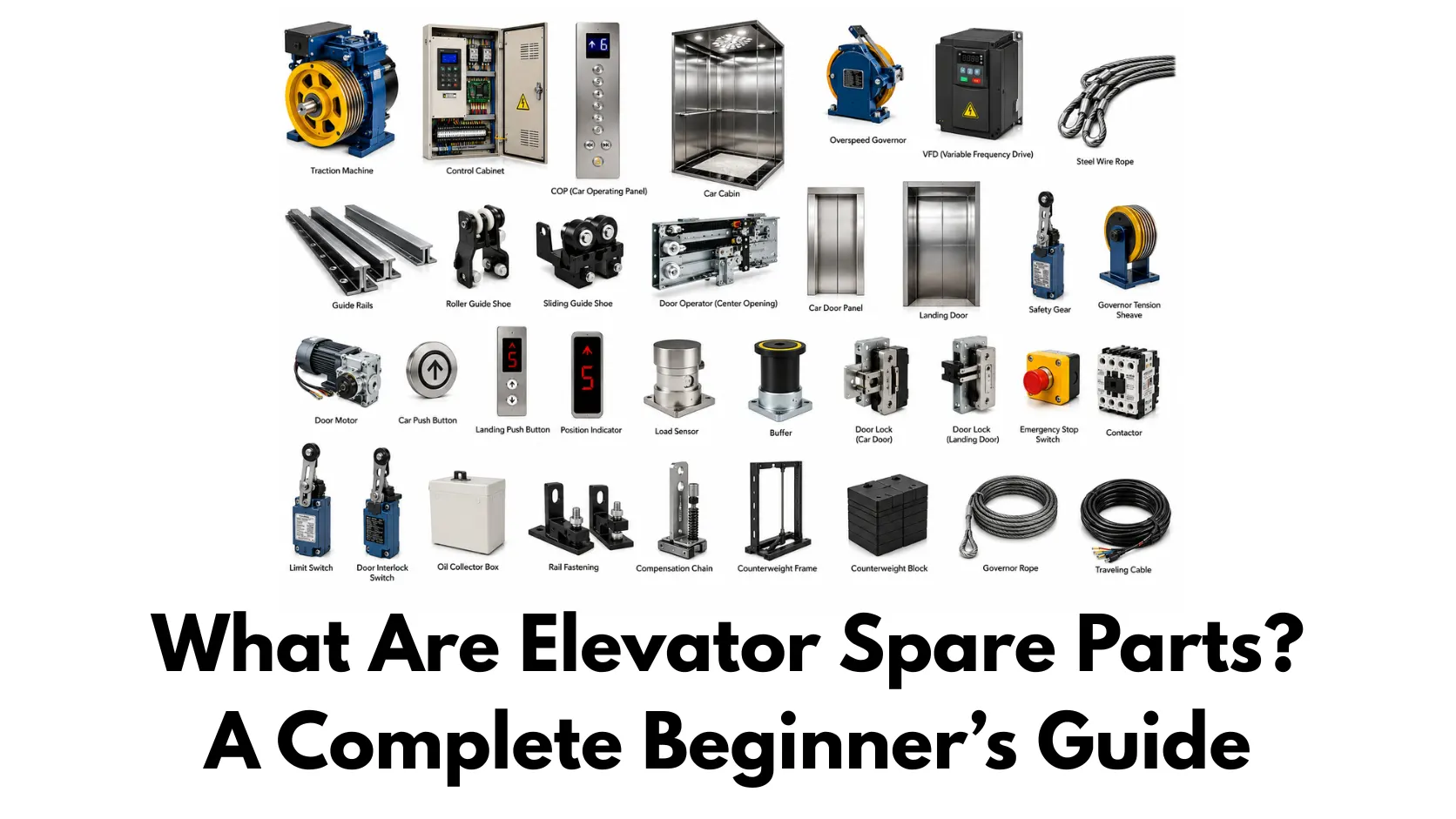
Elevator Not Working Properly? The Problem May Be a Small Spare Part
Most people only notice an elevator when something goes wrong. The doors stop opening smoothly. Strange noises appear. The lift becomes slow or suddenly shuts down.
In many cases, the cause is not the entire elevator system. A worn-out spare part is often responsible.
Understanding elevator spare parts can help building owners, facility managers, maintenance teams, and even homeowners make better decisions about elevator maintenance and repairs.
This beginner-friendly guide explains what elevator spare parts are, why they matter, and which components are essential for safe and reliable elevator operation.
What Are Elevator Spare Parts?
Elevator spare parts are individual components used to operate, maintain, repair, or replace parts within an elevator system.
These parts work together to ensure smooth movement, passenger safety, and efficient performance.
Without properly functioning spare parts, an elevator cannot operate safely or reliably.
Common Examples of Elevator Spare Parts
- Cabin Set
- Control Cabinet
- Door Operator
- Door Header
- Traction Motor
- AVR & ARD
- COP & LOP
- Guide Rail
- Safety Governor
- Pulley
- Dumping Pad
- Encoder
- Push Button
- Door Inverter
- Elevator Buffer
Each component performs a specific task within the elevator system.
Why Are Elevator Spare Parts Important?
Elevator spare parts directly affect:
- Passenger safety
- Ride comfort
- Energy efficiency
- System reliability
- Maintenance costs
- Elevator lifespan
Using high-quality elevator spare parts reduces unexpected breakdowns and improves long-term performance.
Understanding the Main Parts of an Elevator System
Before learning about spare parts, it helps to understand the basic elevator structure.
I. Elevator Cabin
The cabin carries passengers and goods between floors.
Key components include:
- Cabin frame
- Handrails
- Mirrors
- Display panels
- Control buttons
II. Elevator Shaft
The shaft is the vertical passage through which the elevator travels.
Important components include:
- Guide rails
- Counterweight system
- Wire ropes
III. Machine Room
This area houses critical operating equipment.
Main components include:
- Elevator motor
- Traction machine
- Controller
- Inverter
IV. Safety System
Safety components protect passengers during emergencies.
Examples include:
- Safety gear
- Overspeed governor
- Emergency brakes
- ARD systems
Essential Elevator Spare Parts and Their Functions
1. Elevator Controller
The controller acts as the brain of the elevator.
Function
- Controls elevator movement
- Manages floor selection
- Monitors system performance
Importance
Without a controller, the elevator cannot operate correctly.
2. Traction Machine
The traction machine generates the lifting force required to move the cabin.
Benefits
- Smooth operation
- High efficiency
- Reliable performance
3. Elevator Motor
The motor powers the traction system.
Common Types
- Geared motors
- Gearless motors
Modern gearless motors offer better energy efficiency and quieter operation.
4. Wire Ropes
Wire ropes connect the cabin and counterweight.
Key Benefits
- Strength
- Stability
- Safe lifting operation
Regular inspection is essential.
5. Guide Rails
Guide rails keep the elevator cabin moving in a straight path.
Advantages
- Smooth travel
- Reduced vibration
- Improved passenger comfort
6. Elevator Brake System
The brake system stops the elevator safely when needed.
Importance
This is one of the most critical safety components.
7. Door Operator
The door operator controls door opening and closing.
Benefits
- Smooth operation
- Reduced wear
- Better safety
8. Door Sensors
Door sensors detect passengers and objects.
Function
They prevent doors from closing when someone is entering or exiting.
9. Elevator Buttons and Indicators
These components help passengers interact with the elevator.
Examples include:
- Floor buttons
- Direction indicators
- Digital displays
10. ARD (Automatic Rescue Device)
An ARD system moves passengers to the nearest floor during a power failure.
Benefits
- Passenger safety
- Reduced panic
- Emergency protection
11. Encoder Systems
Encoders monitor elevator position and speed.
Benefits
- Accurate floor leveling
- Smooth operation
- Better control
12. Inverters and VVVF Drives
These devices regulate motor speed.
Advantages
- Energy savings
- Comfortable rides
- Reduced mechanical stress
Elevator Safety Components Explained
Safety components are the foundation of every elevator system.
I. Overspeed Governor
Detects excessive speed and activates safety systems.
II. Safety Gear
Stops the cabin if abnormal movement occurs.
III. Emergency Brake System
Provides immediate stopping power when needed.
IV. Door Safety Sensors
Protect passengers from door-related accidents.
V. Emergency Alarm System
Allows communication during emergencies.
Most Common Elevator Spare Parts That Need Replacement
Certain components wear out faster than others.
Frequently Replaced Parts
- Elevator buttons
- Door rollers
- Door sensors
- ARD batteries
- Brake pads
- PCB boards
- Display indicators
Regular maintenance helps identify issues before failures occur.
Signs Your Elevator Spare Parts Need Replacement
Watch for these warning signs:
Unusual Noises
Grinding, squeaking, or rattling sounds often indicate worn components.
Door Problems
Doors opening slowly or getting stuck may signal sensor or operator issues.
Slow Performance
Delayed movement can indicate controller or motor problems.
Frequent Breakdowns
Repeated faults often point to aging spare parts.
Error Messages
Modern elevators display fault codes when problems occur.
Genuine vs. Aftermarket Elevator Spare Parts
1. Genuine Elevator Spare Parts
These parts come directly from the elevator manufacturer or from a vendor they officially recognize.
Benefits
- Better compatibility
- Longer lifespan
- Warranty support
- Higher reliability
2. Aftermarket Elevator Spare Parts
Produced by third-party manufacturers.
Benefits
- Lower cost
- Wider availability
Risks
- Quality variations
- Compatibility issues
For critical components, genuine parts are usually the safer choice.
How to Choose the Right Elevator Spare Parts
Before purchasing any component:
I. Check Compatibility
Ensure the part matches your elevator model.
II. Verify Specifications
Compare technical requirements carefully.
III. Confirm Warranty
A warranty provides additional protection.
IV. Buy From Trusted Suppliers
Choose suppliers with proven industry experience.
V. Consider Long-Term Value
Low-cost parts may increase future maintenance expenses.
Common Elevator Problems Caused by Faulty Spare Parts
Faulty spare parts can lead to:
- Elevator stops between floors
- Door malfunctions
- Excessive vibration
- Poor leveling accuracy
- Unexpected shutdowns
- Slow response times
Replacing worn components early reduces these risks.
Benefits of Using High-Quality Elevator Spare Parts
Investing in quality components offers several advantages.
1. Improved Safety
Reliable parts reduce accident risks.
2. Lower Maintenance Costs
Fewer breakdowns mean fewer repairs.
3. Longer Elevator Lifespan
Quality components reduce wear on the system.
4. Better Passenger Experience
Smooth rides improve user satisfaction.
5. Increased Reliability
The elevator remains operational when needed most.
Where Can You Buy Elevator Spare Parts?
Reliable sources include:
- Authorized distributors
- Elevator manufacturers
- Lift spare parts suppliers
- Elevator maintenance companies
Before buying, always verify:
- Product authenticity
- Warranty coverage
- Technical specifications
- Supplier reputation
Frequently Asked Questions
Q. What are elevator spare parts?
Elevator spare parts are individual components used to maintain, repair, or replace parts within an elevator system. They ensure safe and efficient operation.
Q. What are the main parts of an elevator?
The main parts include the cabin, controller, motor, traction machine, guide rails, wire ropes, door system, and safety components.
Q. Which elevator spare parts wear out the fastest?
Door sensors, buttons, rollers, ARD batteries, and brake components typically require replacement more frequently.
Q. Why are genuine elevator spare parts important?
Genuine parts provide better compatibility, reliability, safety, and warranty protection compared to many aftermarket alternatives.
Q. What does an ARD system do?
An automatic rescue device moves passengers safely to the nearest floor during a power outage.
Elevator spare parts may seem small, but they play a major role in safety, performance, and reliability. From controllers and motors to door sensors and safety gears, every component contributes to smooth elevator operation. Understanding these parts helps building owners make smarter maintenance decisions, reduce downtime, and improve passenger safety.
Need Quality Elevator Spare Parts?
Choose genuine, high-performance elevator components from trusted suppliers. The right spare parts help extend equipment life, reduce repair costs, and keep your elevator running safely every day.